Skip to content
Nextryzer Technologies
Customer Experience

AutoForge – Car Repair Shop Website with Service Plans & Admin Dashboard

A modern car repair shop platform built with Next.js and PostgreSQL, with service booking, maintenance plans, estimates and an admin dashboard to track complaints, job status and reports.

ClientAutoForge
Visit live project (opens in a new tab)
AutoForge – Car Repair Shop Website with Service Plans & Admin Dashboard - project visual
Project overview

How this project was approached.

The context and problem this project set out to address.

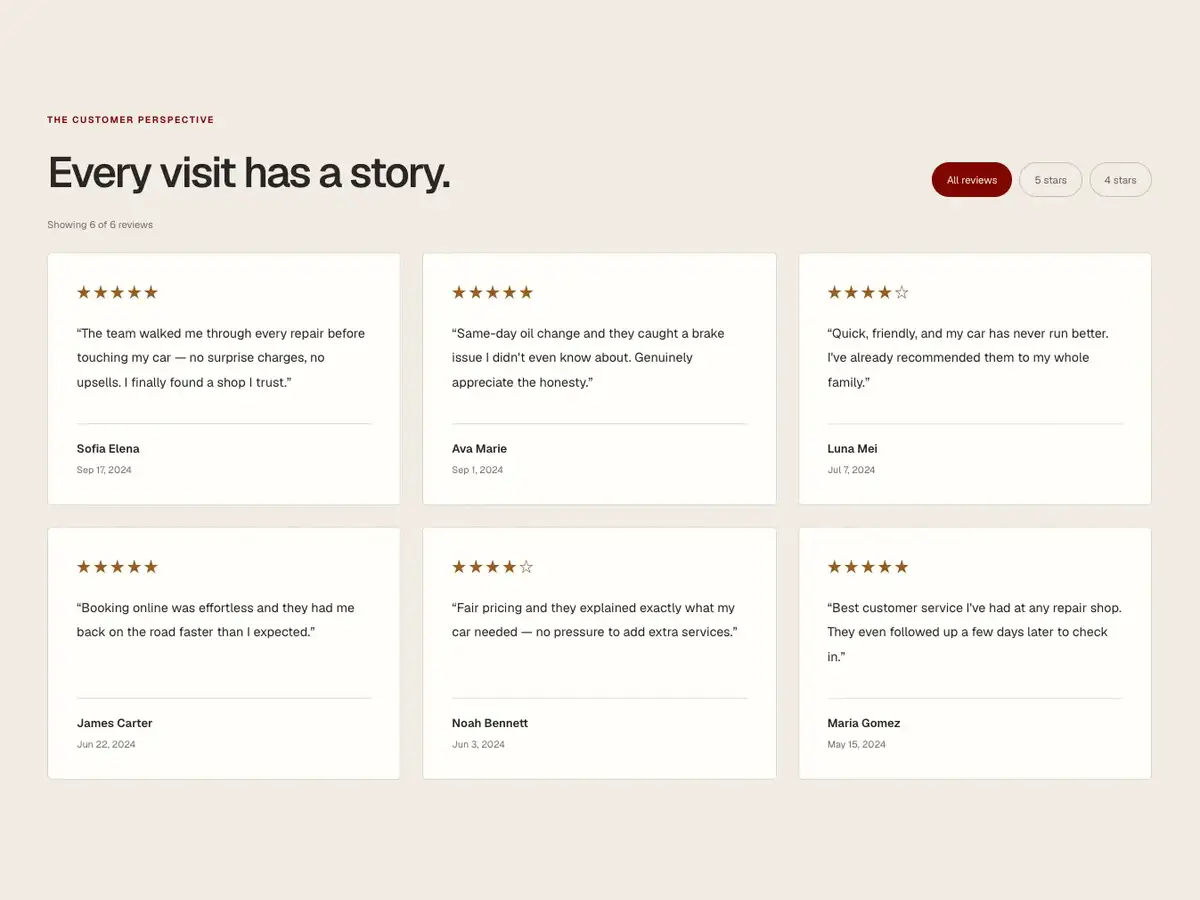
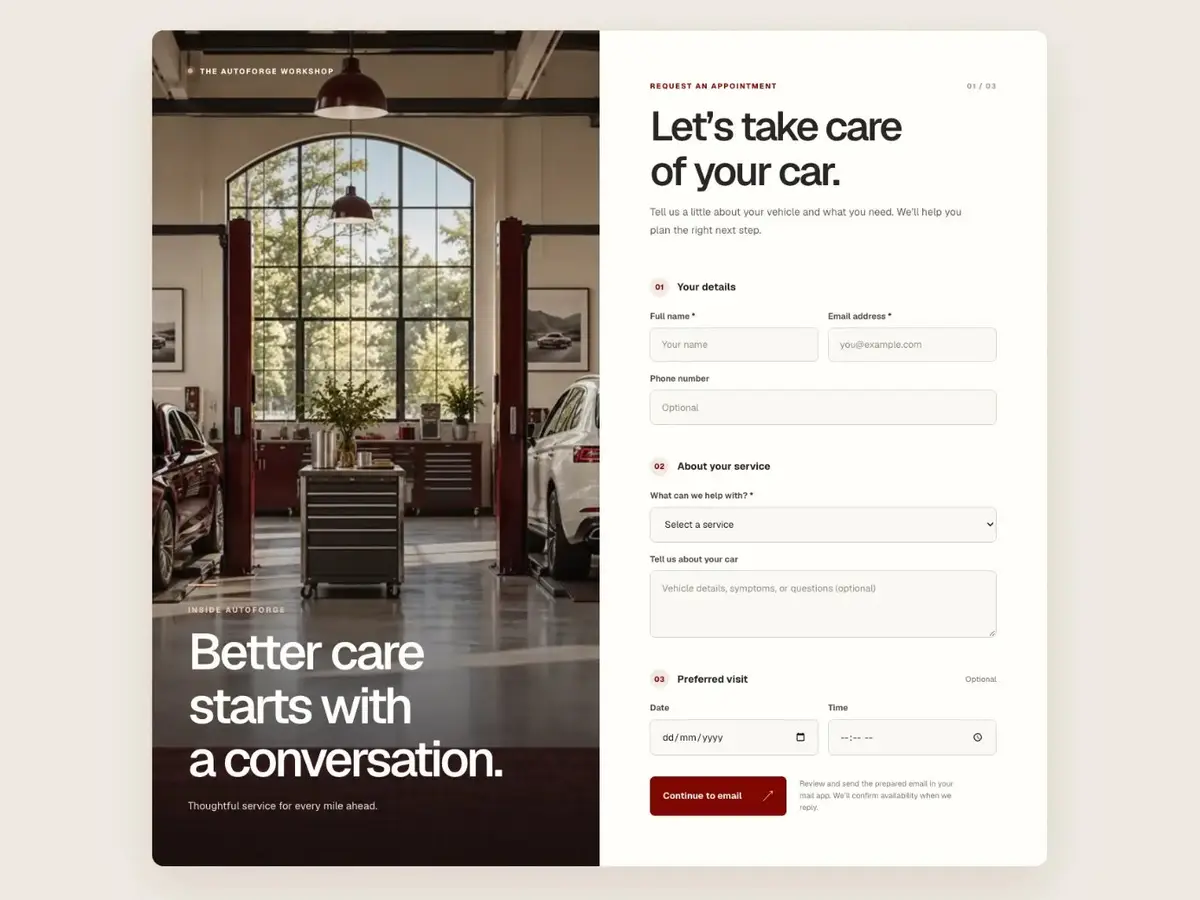
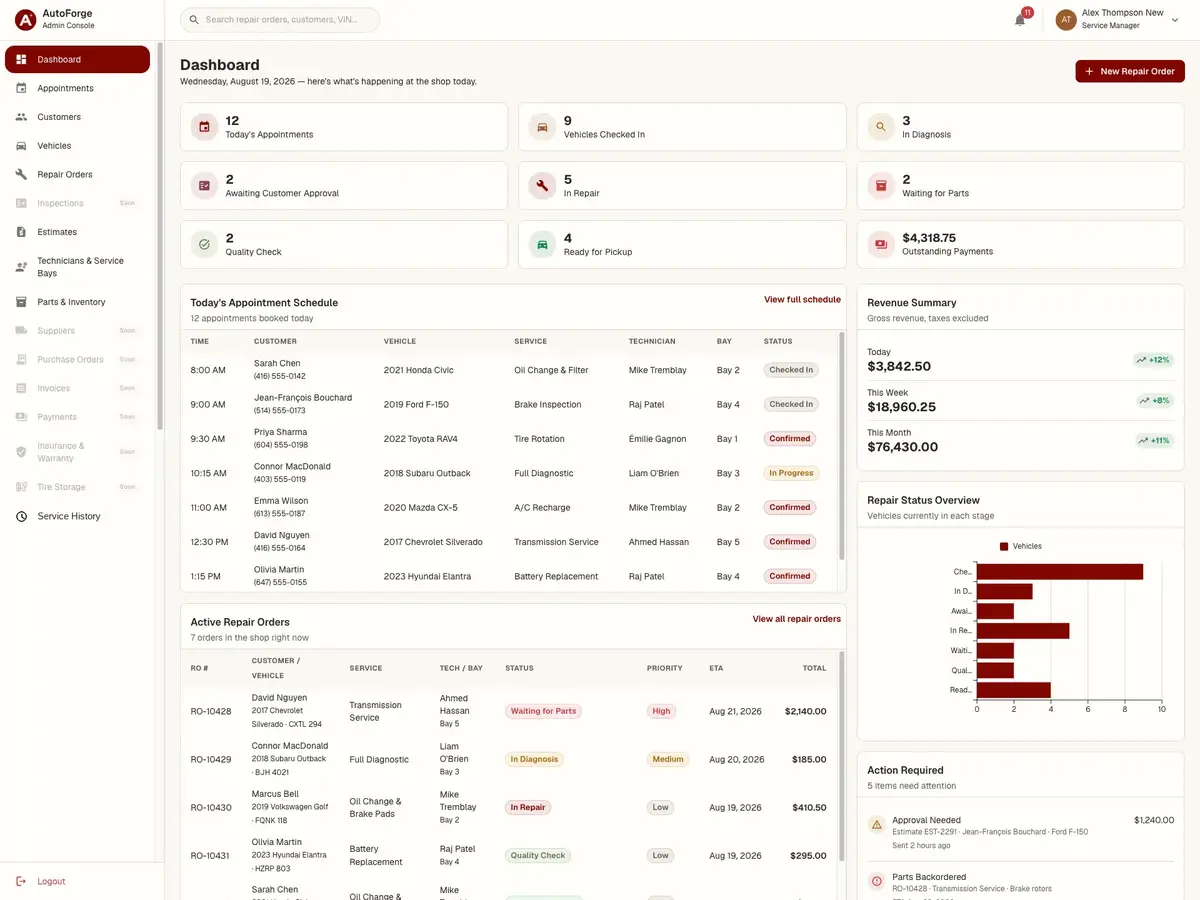
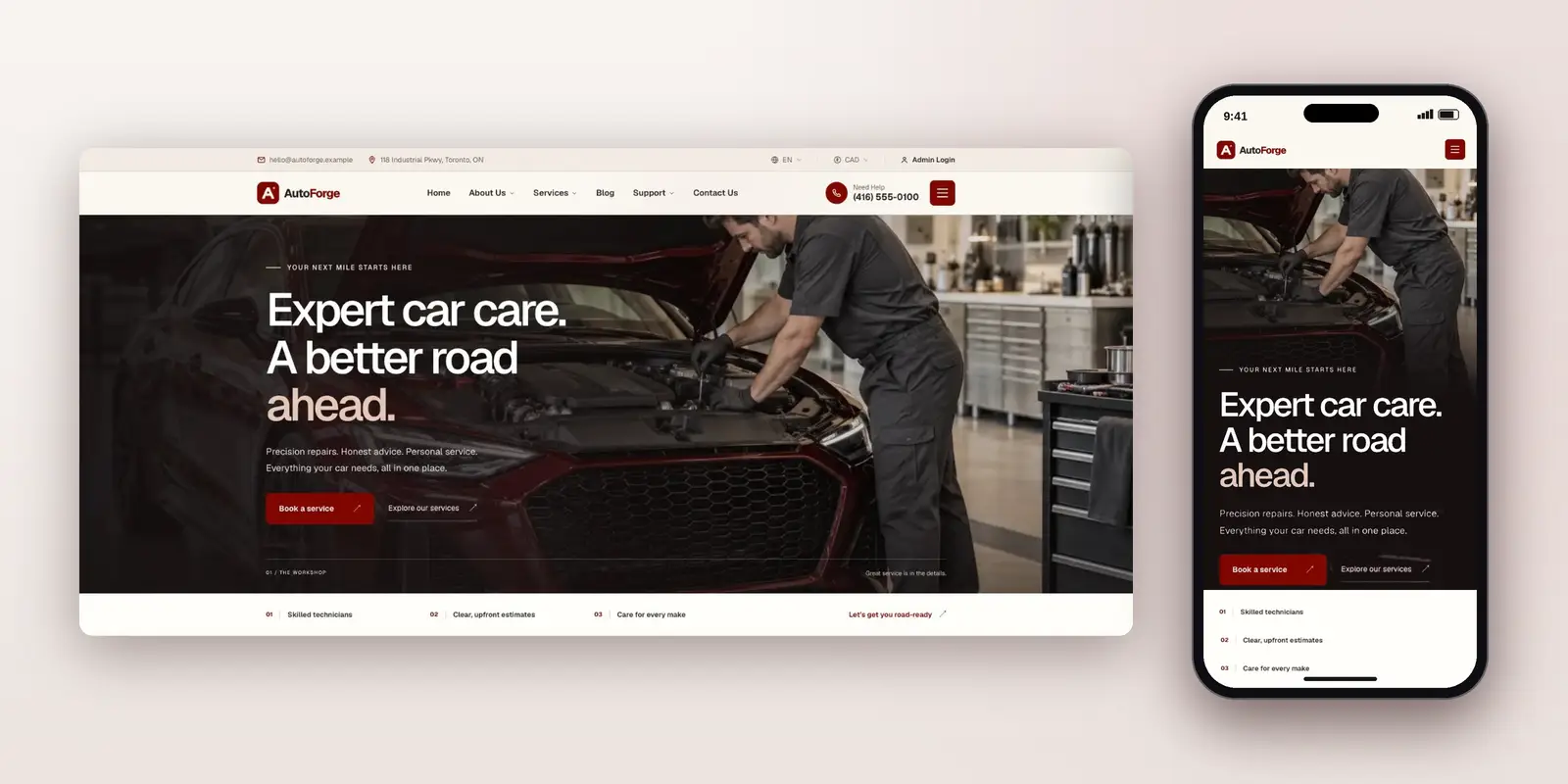
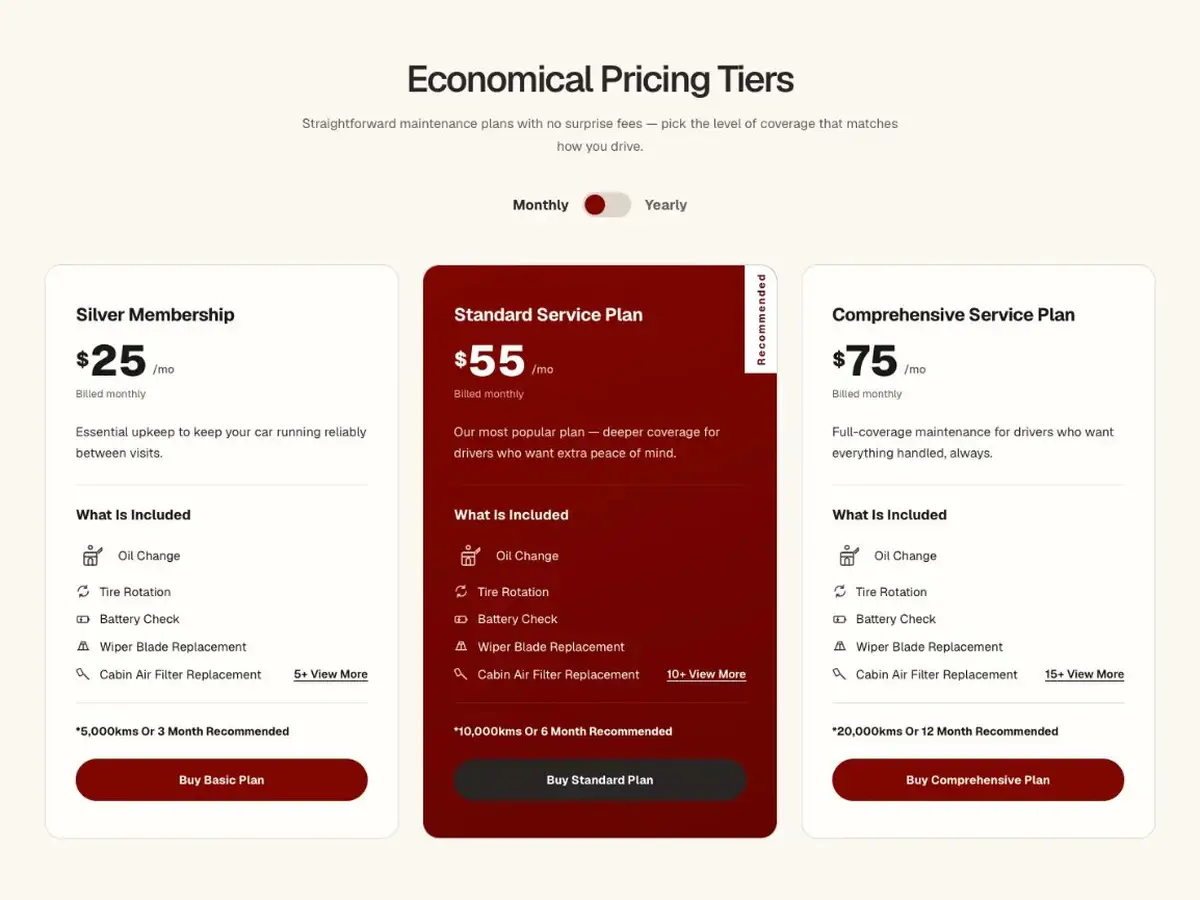
AutoForge is a web app platform for a full-service auto repair workshop in Toronto, offering brake service, engine diagnostics, clutch repair and wheel alignment. We designed and developed a clean, trust-focused website that explains every service clearly. Customers can compare monthly or yearly maintenance plans (Silver, Standard and Comprehensive), meet the specialist technicians, and request an appointment through a guided three-step form. In production, the platform manages service packages and repair estimates, and includes an admin dashboard where staff can log customer complaints, update complaint and job status, and generate reports. Built with Next.js and PostgreSQL and ready to deploy on AWS, it also includes a blog, FAQs, a help center, careers and customer testimonials.

5 challenges

Objectives

The problems the project set out to solve.

  • Car owners often distrust repair shops because of unclear pricing and surprise charges.01
  • Customers struggled to choose the right maintenance coverage.02
  • Appointment requests came in through scattered calls and messages.03
  • The workshop had no central system to track complaints and job progress.04
  • Management lacked clear data on packages, estimates and performance.05
Mapped to scope
5 moves

Solution direction

How the build is shaped to meet them.

  • 01We built transparent service pages and upfront estimates, so customers know the cost before any work begins.
  • 02We created monthly and yearly maintenance plans (Silver, Standard, Comprehensive) with clear inclusions.
  • 03We added a guided three-step appointment request form covering details, service type and preferred visit.
  • 04We built an admin dashboard to log complaints, update status and monitor jobs in real time.
  • 05We added admin tools to manage packages and estimates and to generate business reports.
Solution approach

Product experience

Features and UX designed together.

The project connects functional scope with the role, context, and decision each interface must support.

Service pages for brakes, engine diagnostics, clutch and alignment, with detailed service views.

Maintenance plans with a monthly/yearly pricing toggle.

A three-step appointment request form with preferred date and time.

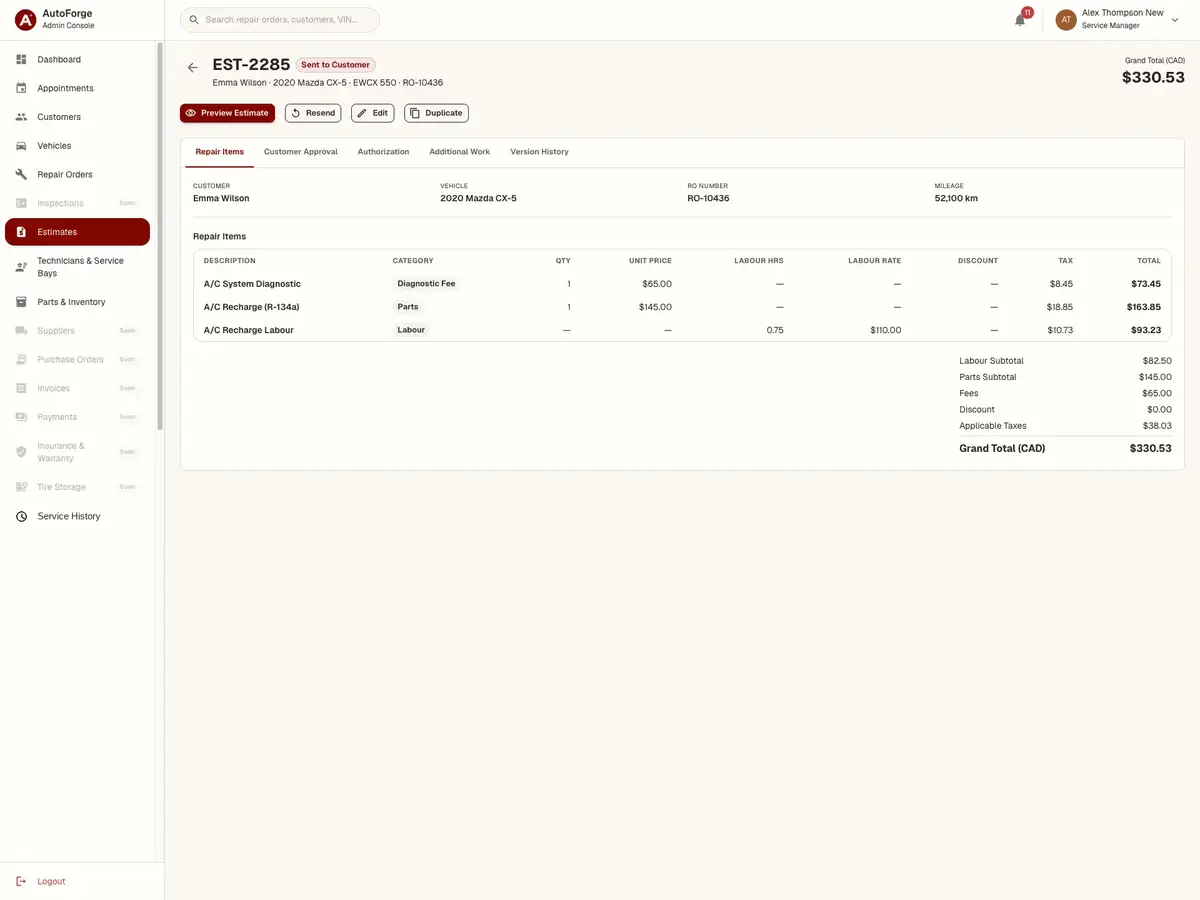
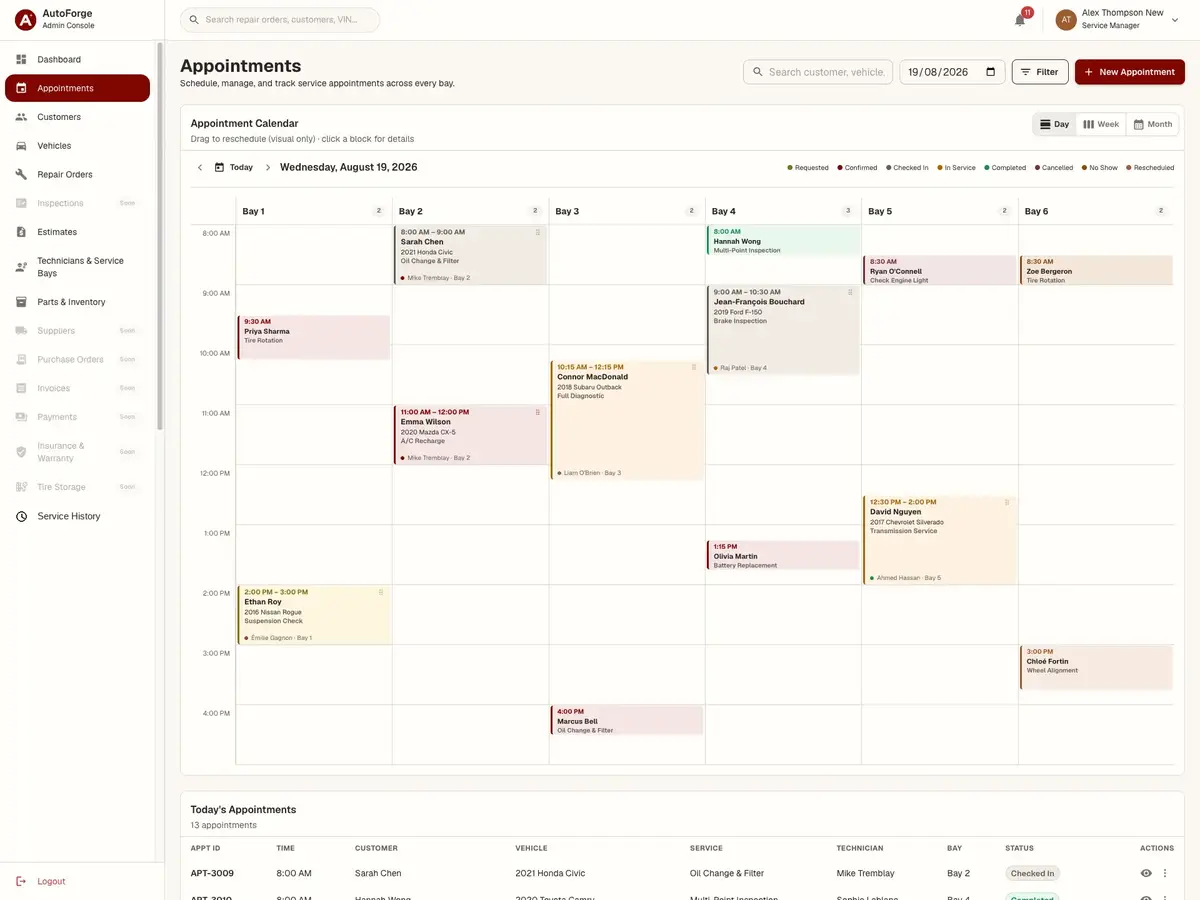
An admin dashboard for packages, estimates, complaint logging, status tracking and reports.

A blog, FAQs, help center, team profiles, testimonials and careers page.

UX/UI principles

01

Role-specific journeys for professional services users

02

Clear status, exceptions, and next actions

03

Accessible responsive behavior across operating contexts

Architecture

System boundaries designed around change.

Modular application boundaries around crm, business-automation, saas
API-led integration with authoritative business systems
Observable cloud delivery with controlled access and audit history

Development process

Evidence at every stage.

The delivery path followed on this project.

01

Context and workflow discovery

Working output, review criteria, and risk are made visible before the next commitment.

02

Journey and system prototyping

Working output, review criteria, and risk are made visible before the next commitment.

03

Incremental product engineering

Working output, review criteria, and risk are made visible before the next commitment.

04

Risk-led quality validation

Working output, review criteria, and risk are made visible before the next commitment.

05

Controlled deployment and learning

Working output, review criteria, and risk are made visible before the next commitment.

3 steps

Deployment

How it reaches production.

  • Environment and access architecture
  • Automated release and rollback path
  • Monitoring, backup, and operational handover
Release-ready
5 outcomes

Results & outcomes

What the project set out to improve.

  • 01Delivered a live, fully working web app for auto repair and service businesses.
  • 02Built customer trust through transparent pricing, estimates and clear service explanations.
  • 03Streamlined appointment requests into one guided booking flow.
  • 04Gave workshop owners full control over complaints, job status and reports.
  • 05Created a scalable, AWS-ready platform that can be reused for any car service center.
Shared with client approval

Project visuals

Screens from the project.

Imagery from the delivered work.

Maintenance Plans & Pricing
01 / Maintenance Plans & Pricing
Customer Reviews Showcase
02 / Customer Reviews Showcase
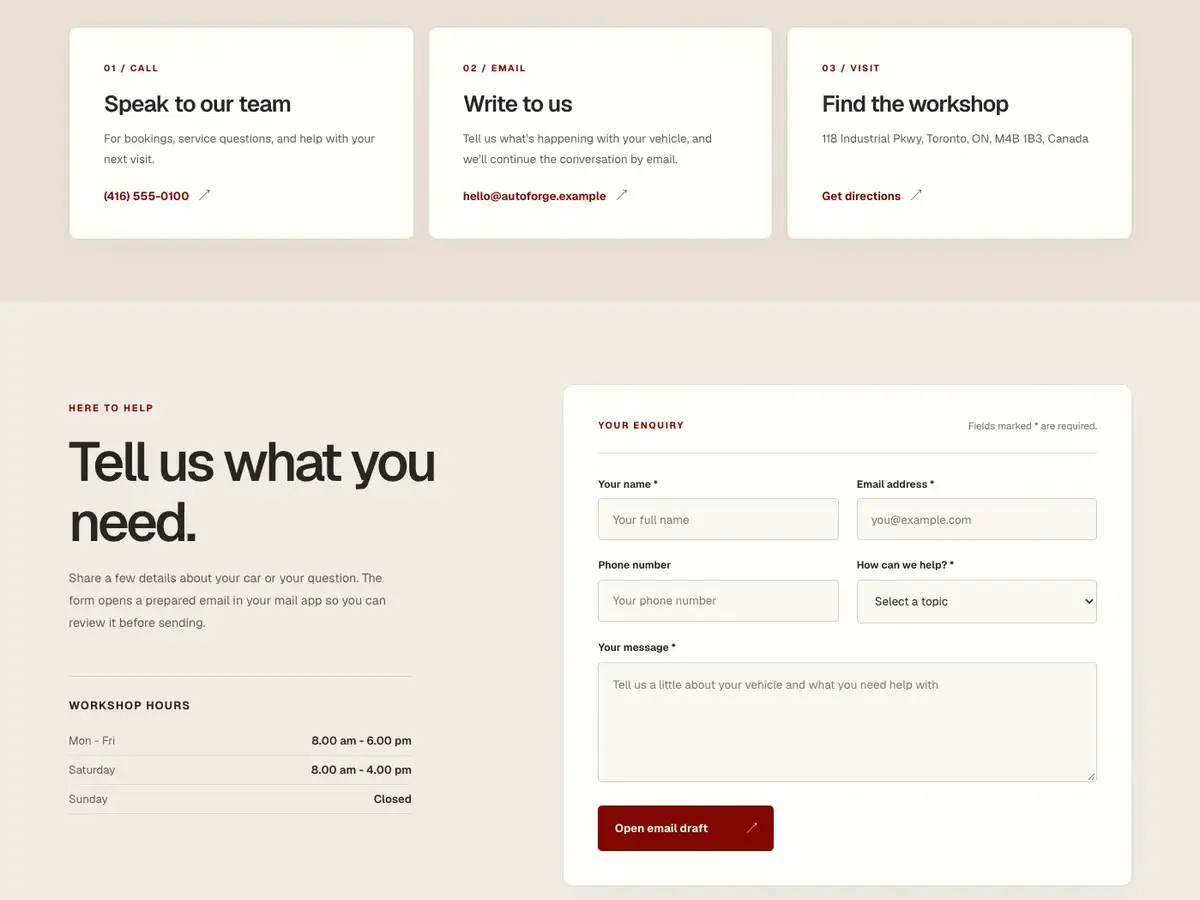
Contact & Enquiry Page
03 / Contact & Enquiry Page
Online Appointment Request
04 / Online Appointment Request
Workshop Admin Dashboard
05 / Workshop Admin Dashboard
Repair Estimate Management
06 / Repair Estimate Management
Service Bay Scheduling
07 / Service Bay Scheduling

About this case study

How this case study is presented.

Who was this professional services project delivered for?
This case study is published for AutoForge with their approval. Any figures shown are limited to what the client has agreed to share.
Could Nextryzer build a similar professional services system?
Yes. The actual scope would follow discovery of workflows, integrations, users, security obligations, operating constraints, and desired business outcomes.

Related case studies

More work worth exploring.

All case studies
Your project, real context

Let’s build the case around your business.

Bring the actual challenge, users, systems, and desired outcome. We’ll help define a credible path forward.

What we’ll map together

  • The core challenge and what success looks like
  • The people and roles the product must serve
  • The systems and data it needs to connect
  • The outcome the business expects to see
Starting point
Professional ServicesCustomer Experience