
 01
01Workflow designer
Shape triggers, stages, responsibilities, handoffs, and exceptions into a workflow teams can understand and improve.
An orchestration system that connects tools, rules, AI, approvals, and human work into measurable operations.
Workflow designer
Trigger-based workflows
Rules engine
Conditional routing
Task queues
Human review queues
Workflow designer
Rules engine
Task queues
Document processing
Designed for
Bring leadership, operations, and delivery teams into one connected system without flattening the way each function works.
Operations teams
Shared service centers
Businesses scaling manual processes
What it changes
The solution creates one operating model where data, rules, people, and decisions move together.
Repetitive work consumes skilled capacity.
Handoffs disappear across inboxes and spreadsheets.
Exceptions and service levels are difficult to measure.
Modular architecture
Modules work as one system while remaining independently adaptable to roles, policies, markets, and integrations.
01Shape triggers, stages, responsibilities, handoffs, and exceptions into a workflow teams can understand and improve.
 02
02Turn policies and conditions into consistent routing, validation, prioritization, and decision logic.
 03
03Organize incoming work by urgency, ownership, capability, service level, and human review requirements.
 04
04Capture, classify, extract, verify, and route information from documents without losing human oversight.
 05
05Keep important decisions accountable with defined authority, context, escalation, and a traceable history.
 06
06See workload, cycle time, exceptions, service levels, and bottlenecks across connected processes.
Typical workflow
A representative workflow shows how the system coordinates daily work. Exact stages are adapted during discovery.
Active stage
Bring the initiating signal into the system with useful context.
Journey navigator
Select a stage to explore
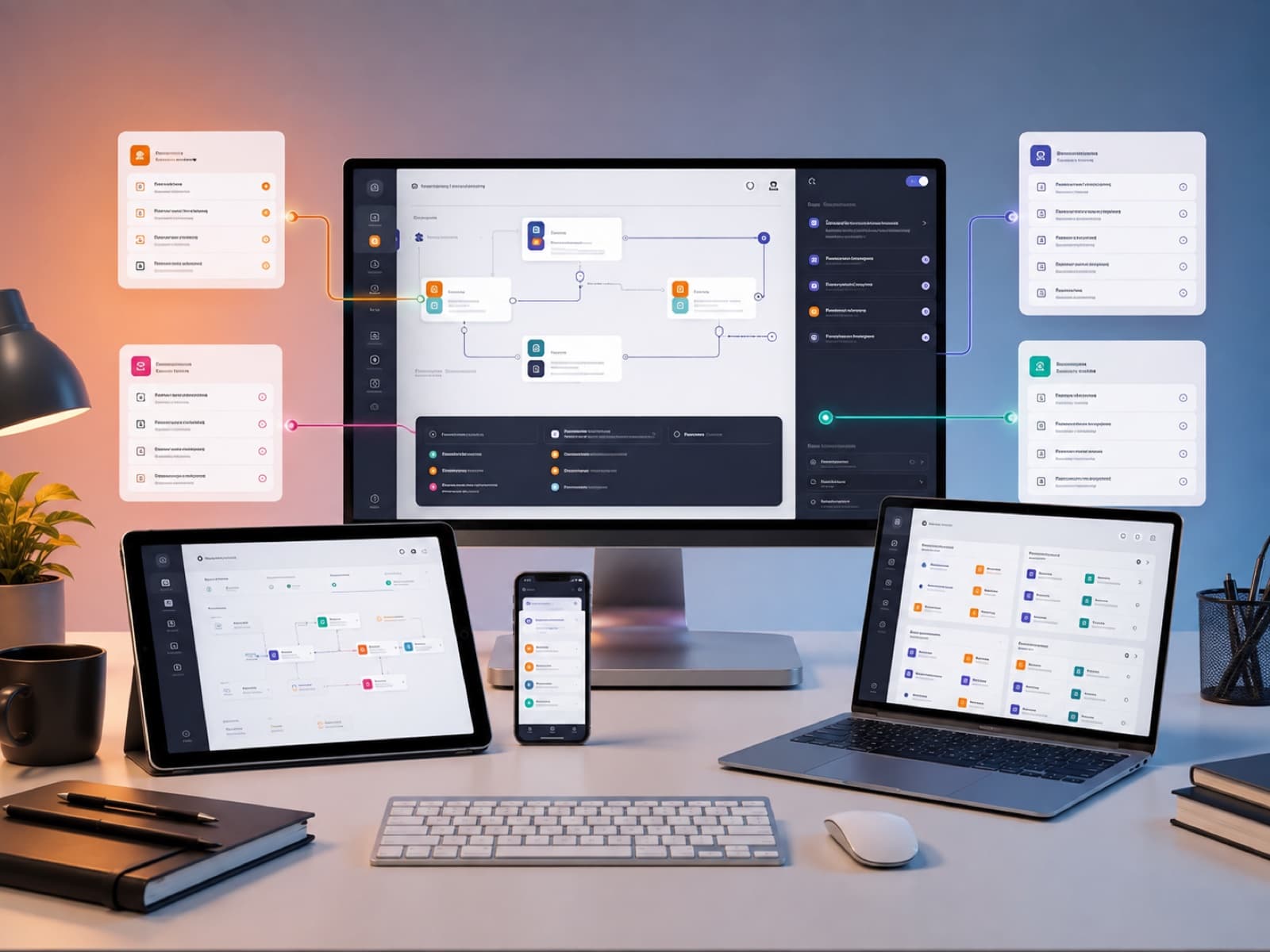
Connected ecosystem
Secure integration prevents the solution from becoming another isolated tool. Data ownership, timing, recovery, and operational visibility are designed into every connection.
Scalability
Queue-based orchestration separates workloads so new processes, higher volumes, and slower external systems remain manageable.
Security
Deployment
Solution questions
Delivery capabilities
Build the operating advantage
Bring the current process, the constraints, and the desired outcome. We’ll help shape the right system around the way your business needs to operate.
Business Automation discovery map
A practical first conversation about how the system should serve your operating model.
Operating context
Users, teams, priorities
Core journeys
Workflows, rules, experience
System landscape
Data, tools, integrations
Delivery path
Core, rollout, adoption
Discovery → direction → a delivery plan grounded in business reality.