Skip to content
Nextryzer Technologies
Demo project conceptBusiness Platforms

The Toy Shop - SEO-Optimized Toy E-commerce Store with Admin Dashboard

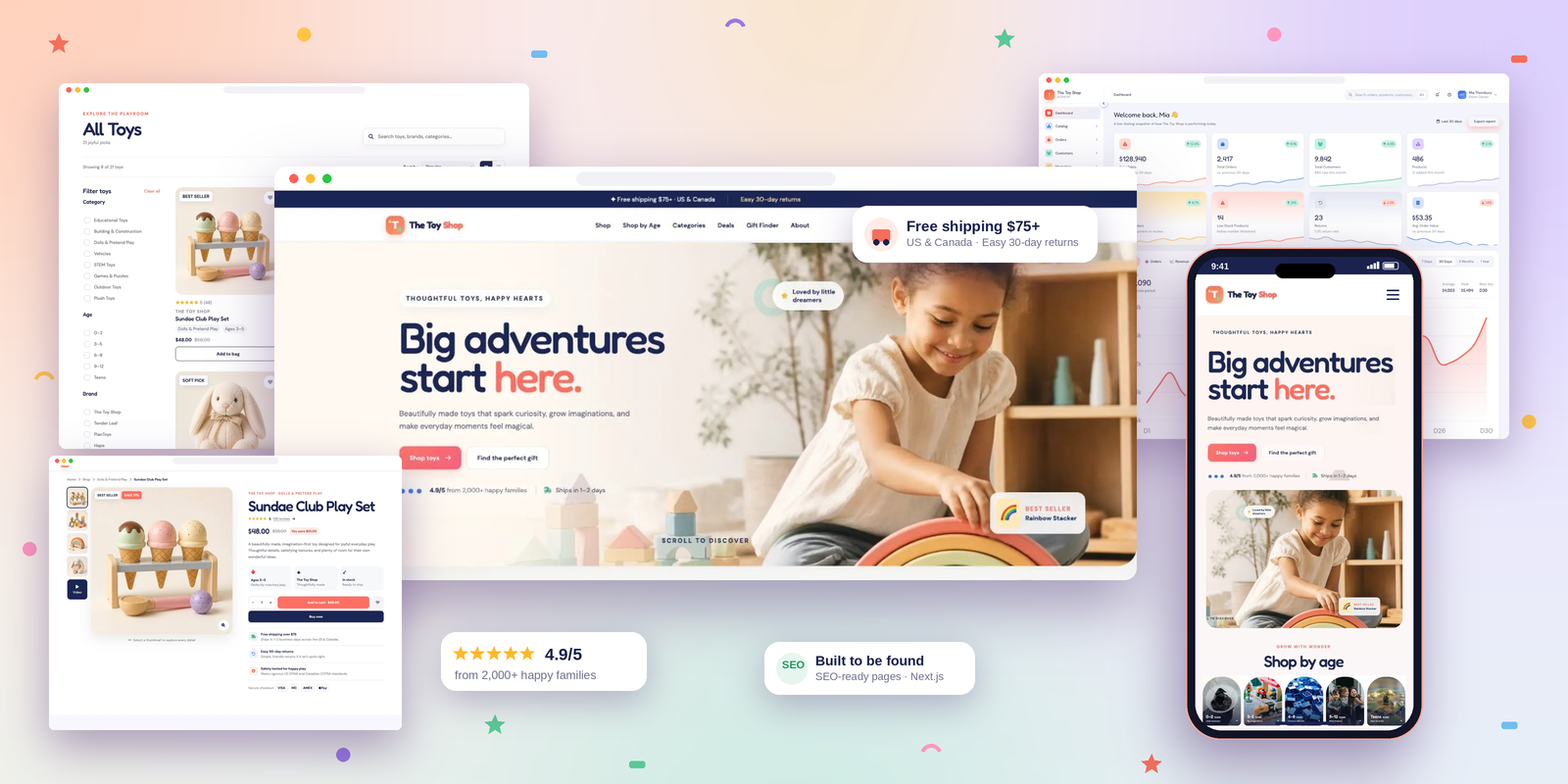
A colourful, SEO-optimized toy e-commerce store built with Next.js, PostgreSQL and Supabase, with age-based shopping, smart filters, a gift finder and a full admin for products, orders and stock.

ClientDemo organization
IndustryEcommerce
Visit live project (opens in a new tab)
The Toy Shop - SEO-Optimized Toy E-commerce Store with Admin Dashboard - project visual

Portfolio disclosure: This is fictional demonstration content. No real client, result, endorsement, or commercial metric is represented.

Project overview

A model for the work - not a claim about completed work.

The framing below shows the kind of problem this concept is built to address.

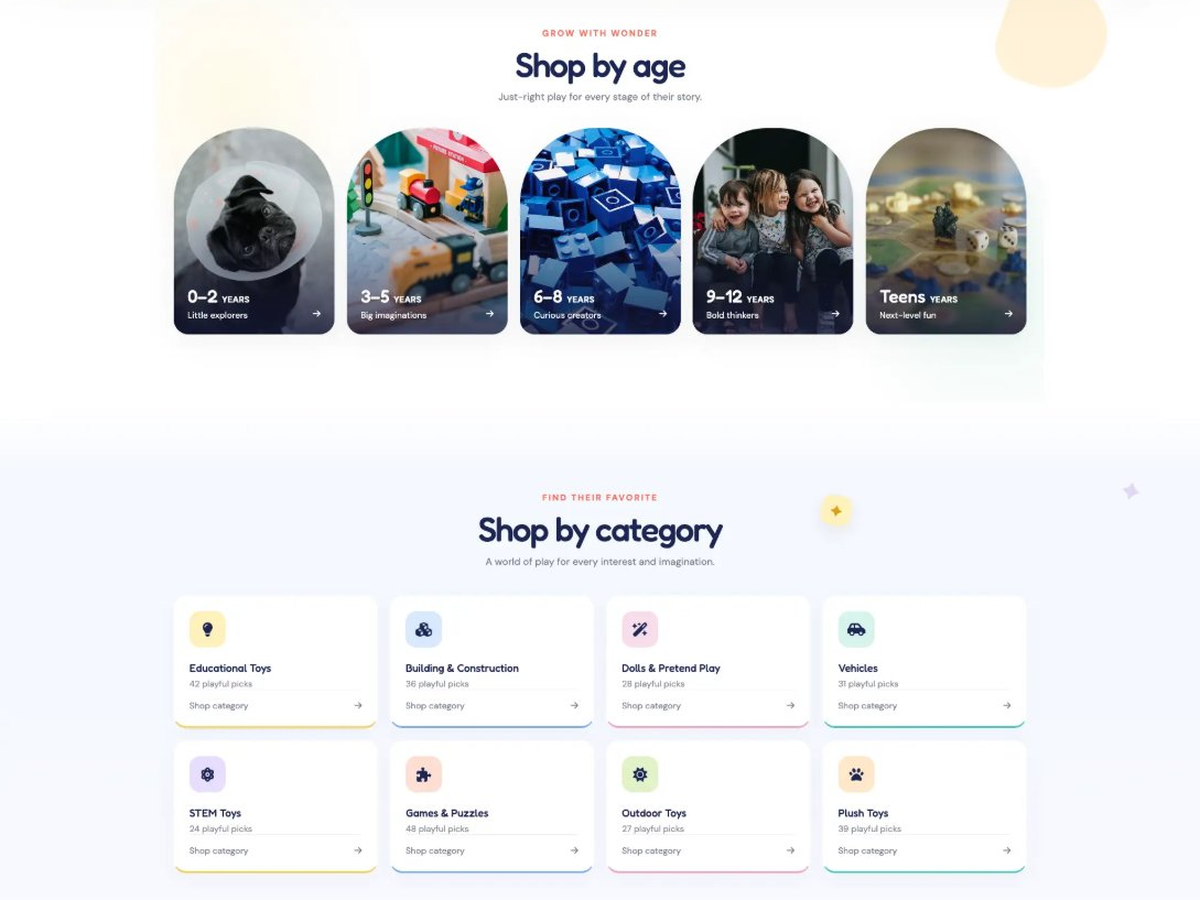
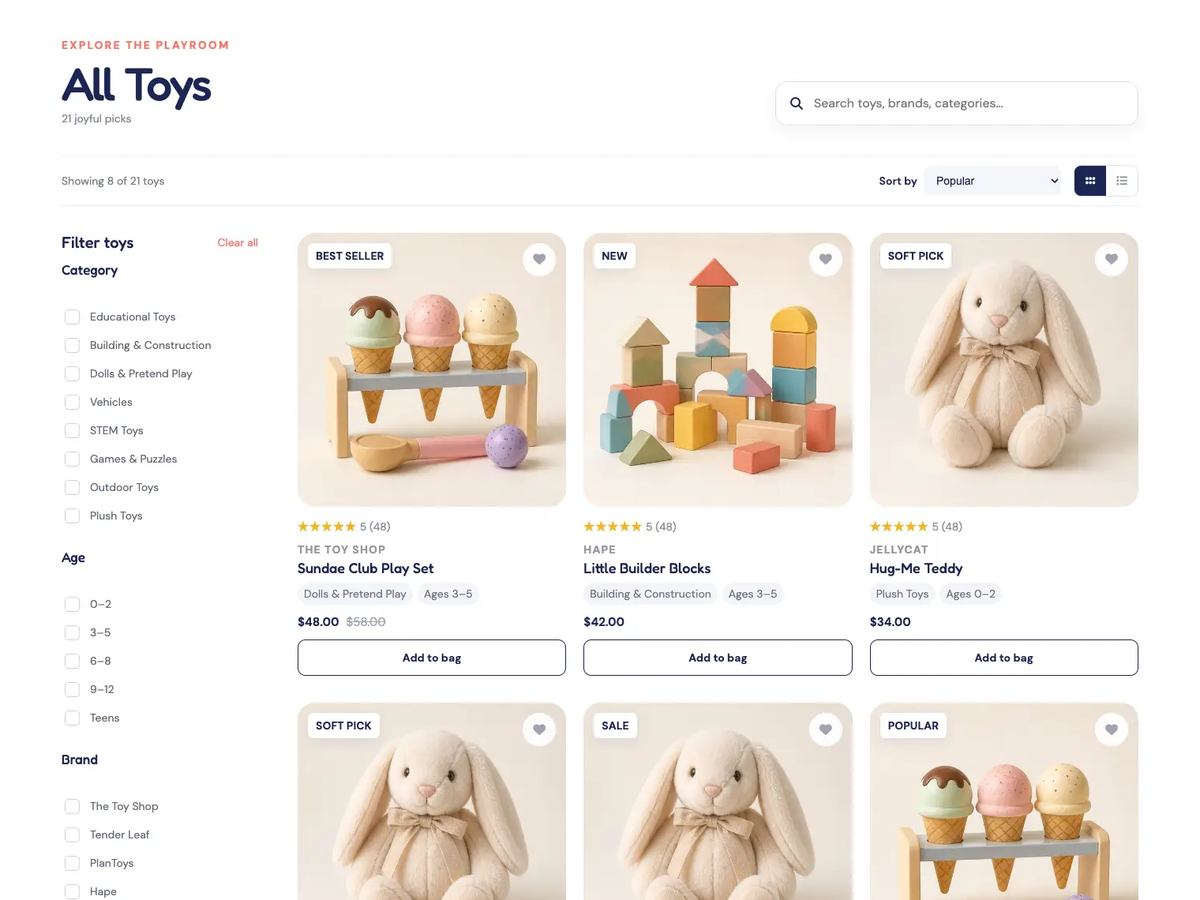
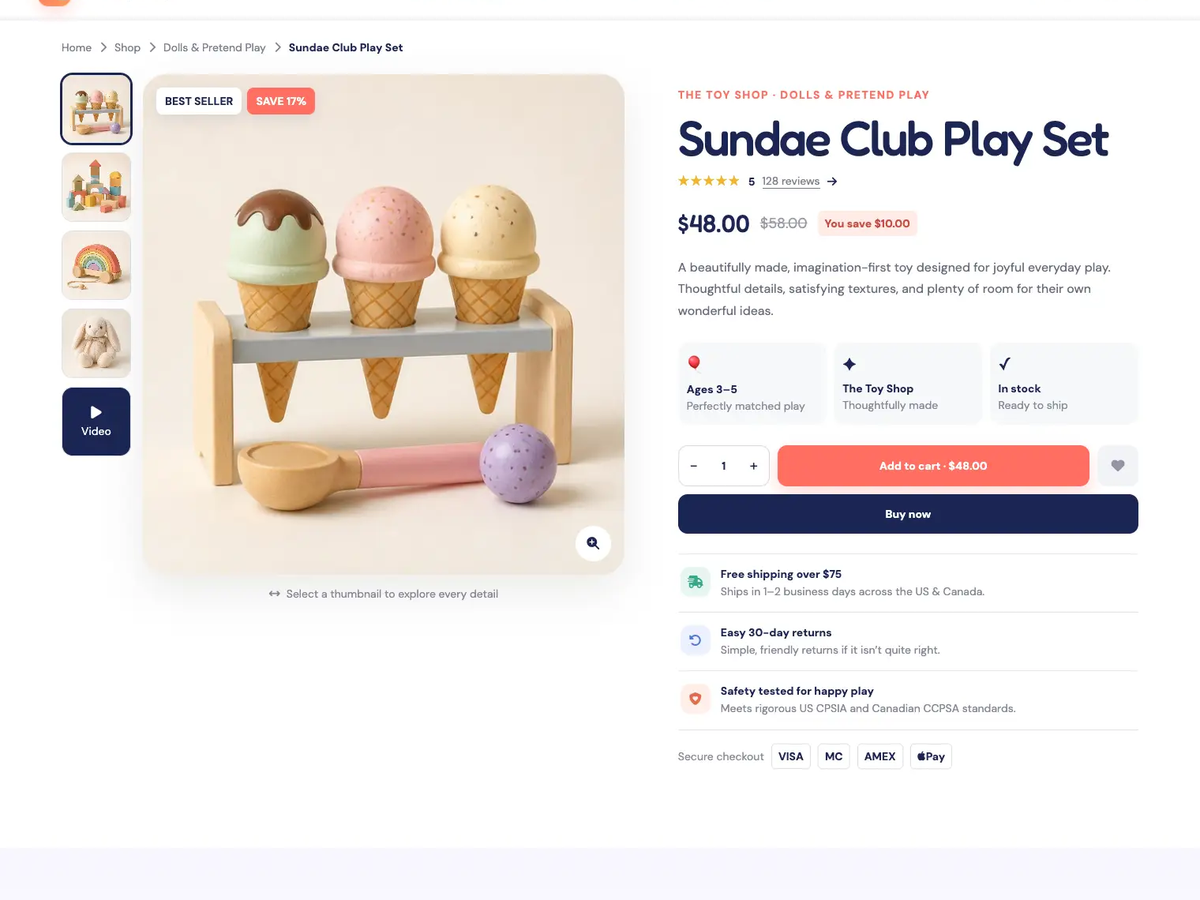
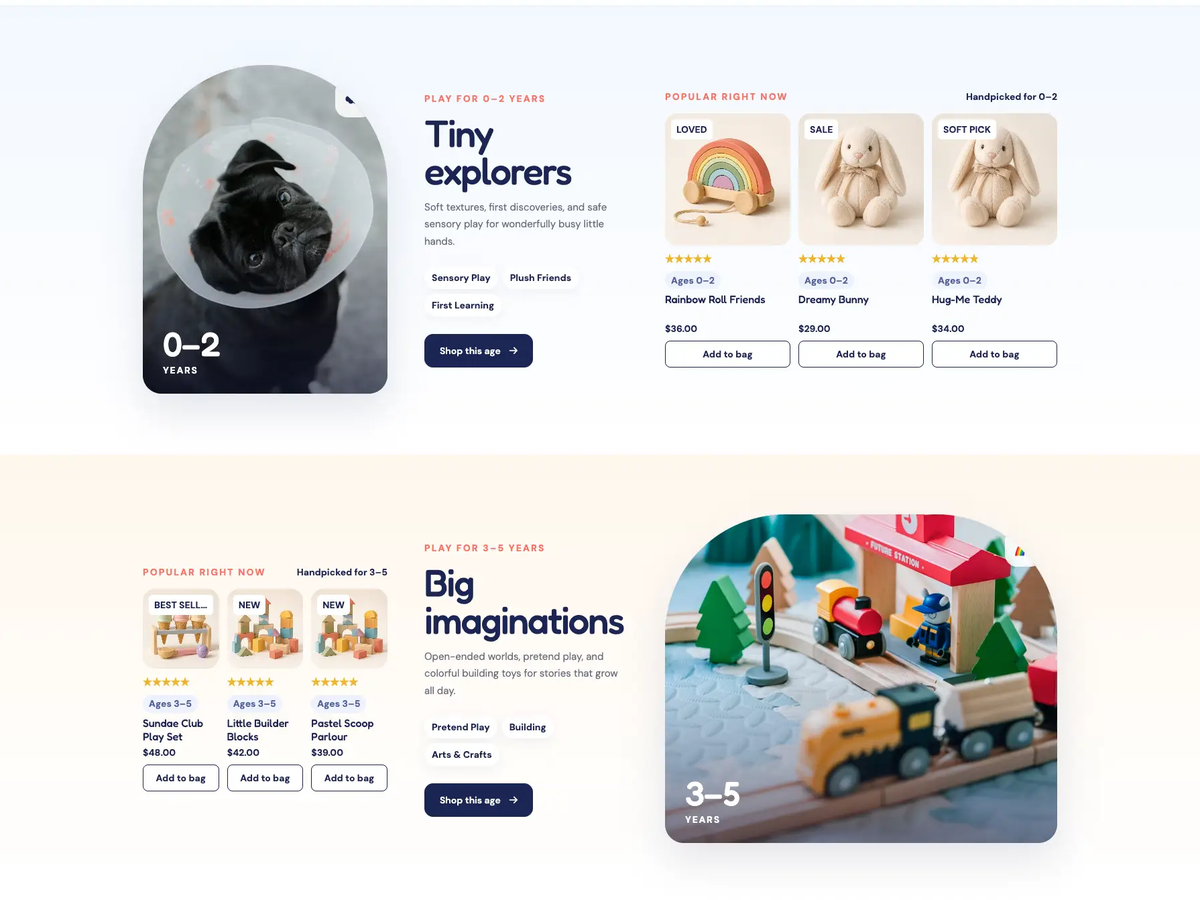
The Toy Shop is a demo e-commerce store for a family toy brand serving the US and Canada. It's designed to be joyful for parents and built to rank on search engines. Shoppers can browse toys by age (0–2, 3–5, 6–8, 9–12 and teens) or by category (educational, STEM, building, pretend play, plush and more). They can filter by brand, price, rating and availability, discover new arrivals, trending toys and best sellers, and use the Gift Finder to get suggestions. Product pages include image galleries, video, safety information, reviews, "frequently bought together" bundles and related toys. A full admin dashboard lets the owner add products, manage categories, brands and collections, track orders from pending to delivered, monitor low stock and moderate reviews. We built it with Next.js, PostgreSQL and Supabase Authentication, with strong SEO throughout. It's ready to deploy on Vercel, Railway, Render, AWS or other clouds, and on shared hosting.

5 challenges

Objectives

The problems the concept is built to solve.

  • Parents struggle to find the right toy for their child's age and interests.01
  • Large toy catalogs are hard to navigate.02
  • New online stores struggle to get organic traffic.03
  • Buyers need confidence in safety and quality before purchasing.04
  • Owners need one place to manage products, orders and stock.05
Mapped to scope
5 moves

Solution direction

How the build is shaped to meet them.

  • 01We built age-based shopping, category browsing and a Gift Finder for guided discovery.
  • 02We added smart filters by category, age, brand, price, rating and availability.
  • 03We built a fully SEO-optimized Next.js store with fast pages, clean URLs and rich product content.
  • 04We added safety standards, reviews, product videos and clear shipping and returns details.
  • 05We built an admin dashboard for catalog, orders, inventory alerts, reviews and store settings.
Direction, not a delivery claim

Product experience

Features and UX designed together.

The demonstration connects functional scope with the role, context, and decision each interface must support.

Shop by age, category, new arrivals, trending toys and best sellers.

Smart filters, search, wishlist, cart and a guided Gift Finder.

Rich product pages with a gallery, video, reviews and "frequently bought together" bundles.

An SEO-optimized, fast, fully responsive Next.js storefront.

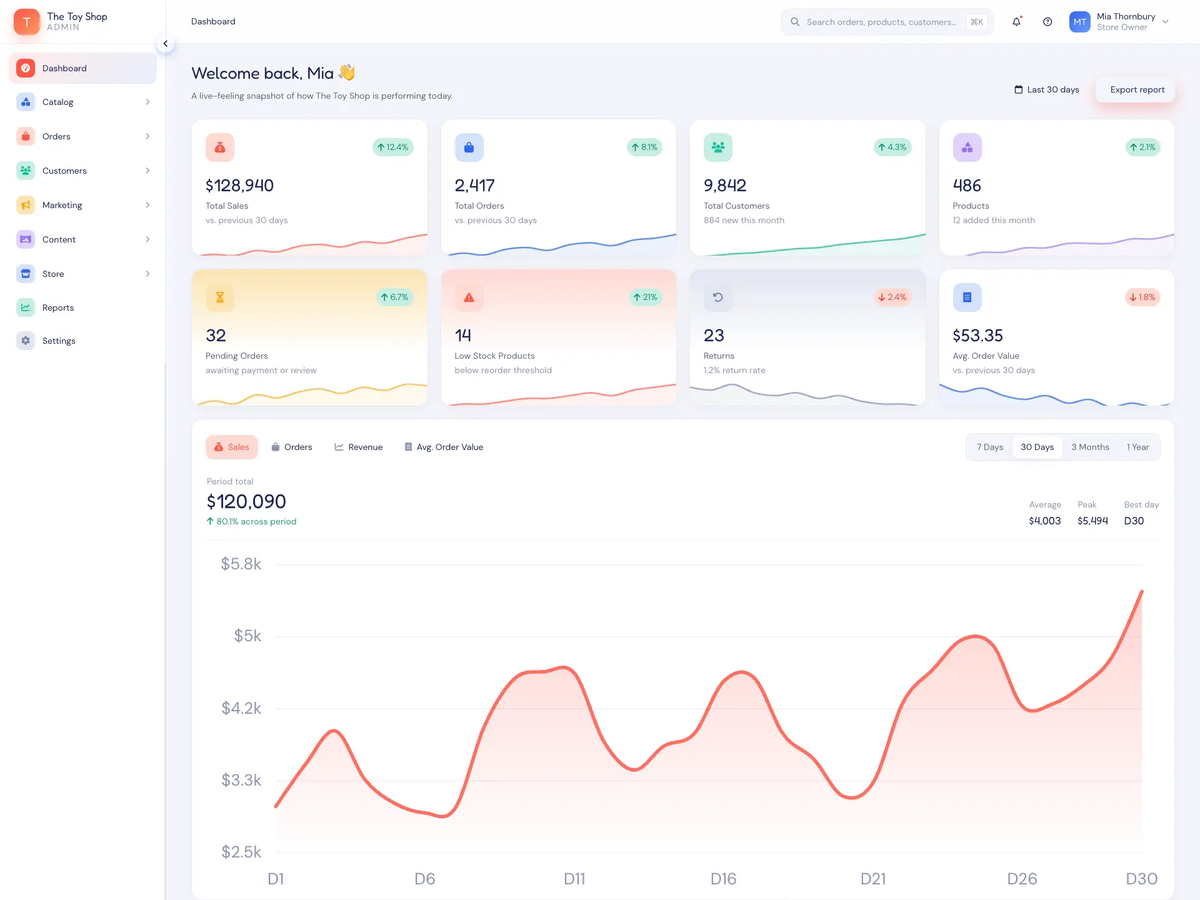
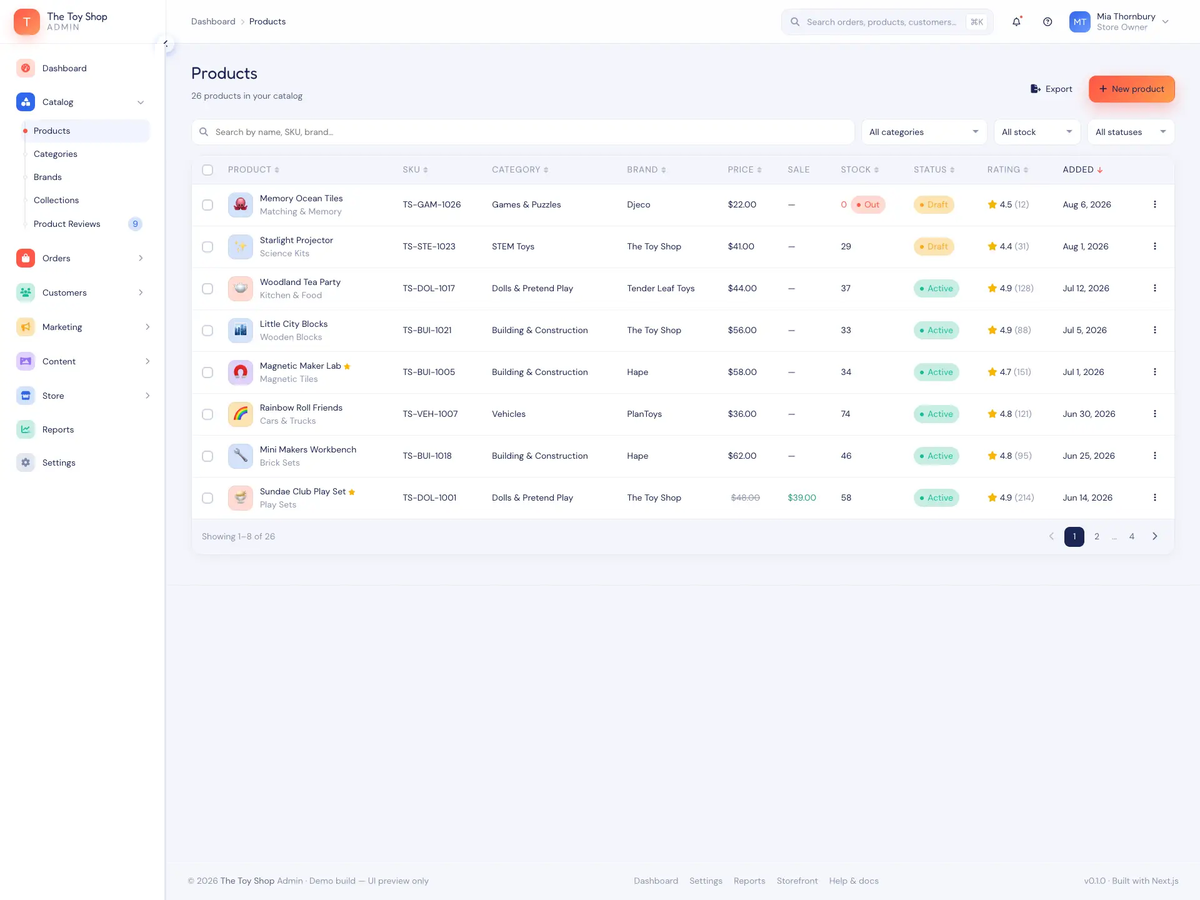
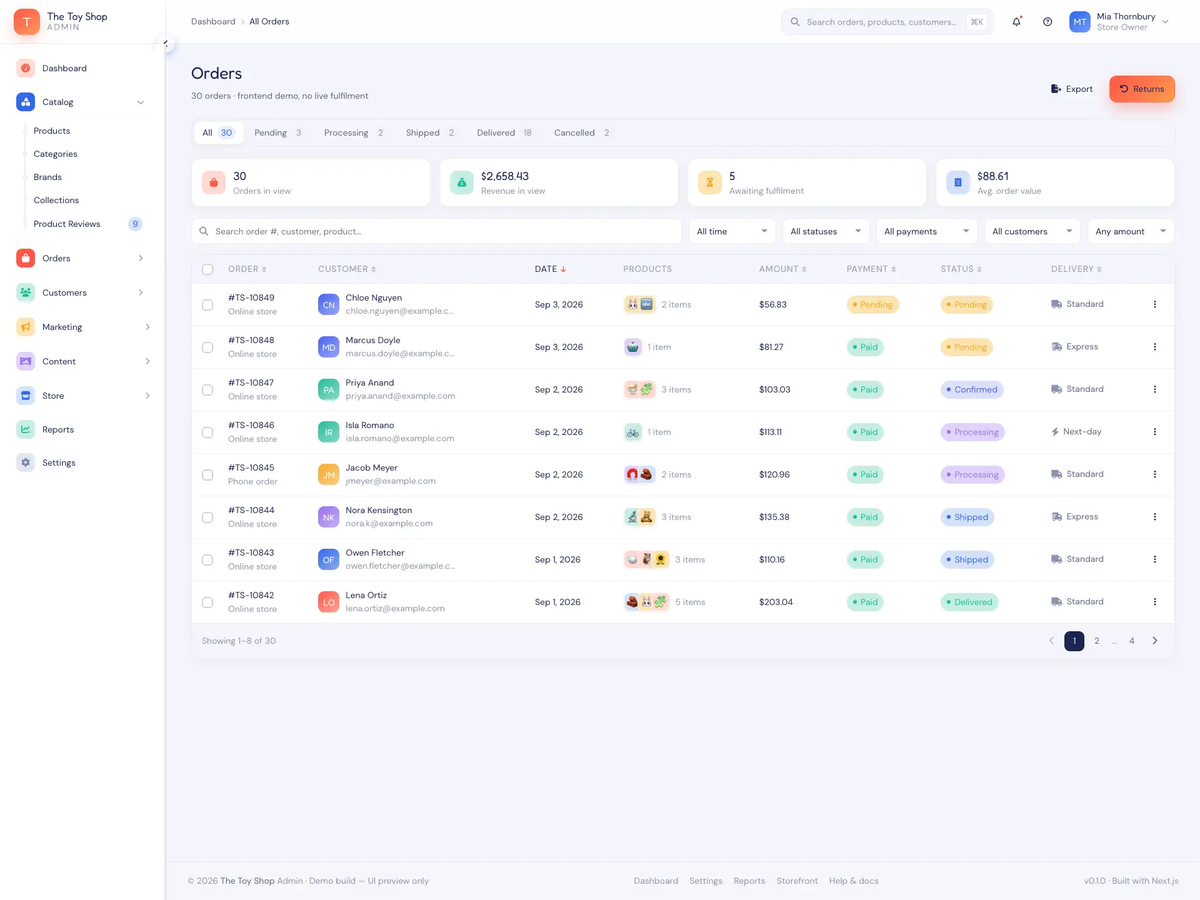
An admin dashboard for products, categories, brands, orders, stock alerts and reviews.

UX/UI principles

01

Role-specific journeys for ecommerce users

02

Clear status, exceptions, and next actions

03

Accessible responsive behavior across operating contexts

Architecture

System boundaries designed around change.

Modular application boundaries around ecommerce, inventory-management, ai-customer-support
API-led integration with authoritative business systems
Observable cloud delivery with controlled access and audit history

Technology stack

Next.js
React
Node.js
PostgreSQL
Amazon Web Services

Development process

Evidence at every stage.

A representative delivery path for this demonstration concept.

01

Context and workflow discovery

Working output, review criteria, and risk are made visible before the next commitment.

02

Journey and system prototyping

Working output, review criteria, and risk are made visible before the next commitment.

03

Incremental product engineering

Working output, review criteria, and risk are made visible before the next commitment.

04

Risk-led quality validation

Working output, review criteria, and risk are made visible before the next commitment.

05

Controlled deployment and learning

Working output, review criteria, and risk are made visible before the next commitment.

3 steps

Deployment

How it reaches production.

  • Environment and access architecture
  • Automated release and rollback path
  • Monitoring, backup, and operational handover
Release-ready
5 outcomes

Results & outcomes

What the concept is expected to move.

  • 01Delivered a live, fully working demo of a colourful toy e-commerce store.
  • 02Made toy discovery easier through age-based and guided shopping.
  • 03Built strong organic search visibility into every page.
  • 04Increased average order value through bundles and related-product suggestions.
  • 05Delivered a flexible platform that deploys on any cloud or shared hosting.
Illustrative, not measured

Project visuals

Concept screens.

Illustrative frames prepared for this concept.

Shop by Age & Category
01 / Shop by Age & Category
Smart Toy Filters & Catalog
02 / Smart Toy Filters & Catalog
Detailed Product Page
03 / Detailed Product Page
Age-Based Toy Discovery
04 / Age-Based Toy Discovery
Store Admin Dashboard
05 / Store Admin Dashboard
Product & Catalog Management
06 / Product & Catalog Management
Order Tracking & Fulfilment
07 / Order Tracking & Fulfilment

About this demo

Clear about what is - and is not - shown.

Is this ecommerce case study based on a real client?
It is presented as demonstration content showing the intended portfolio structure. A real client is only named once they have approved being identified.
Are the outcomes measured results?
No claimed percentages, revenue figures, client names, logos, or testimonials are shown. Verified evidence can replace the placeholder outcome section later.
Could Nextryzer build a similar ecommerce system?
The actual scope would follow discovery of workflows, integrations, users, security obligations, operating constraints, and desired business outcomes.

Related case studies

More work worth exploring.

All case studies
Your project, real context

Let’s build the case around your business.

Bring the actual challenge, users, systems, and desired outcome. We’ll help define a credible path forward.

What we’ll map together

  • The core challenge and what success looks like
  • The people and roles the product must serve
  • The systems and data it needs to connect
  • The outcome the business expects to see
Starting point
EcommerceBusiness Platforms